Which Pocket Camera Should You Buy? Choose for How You Actually Film
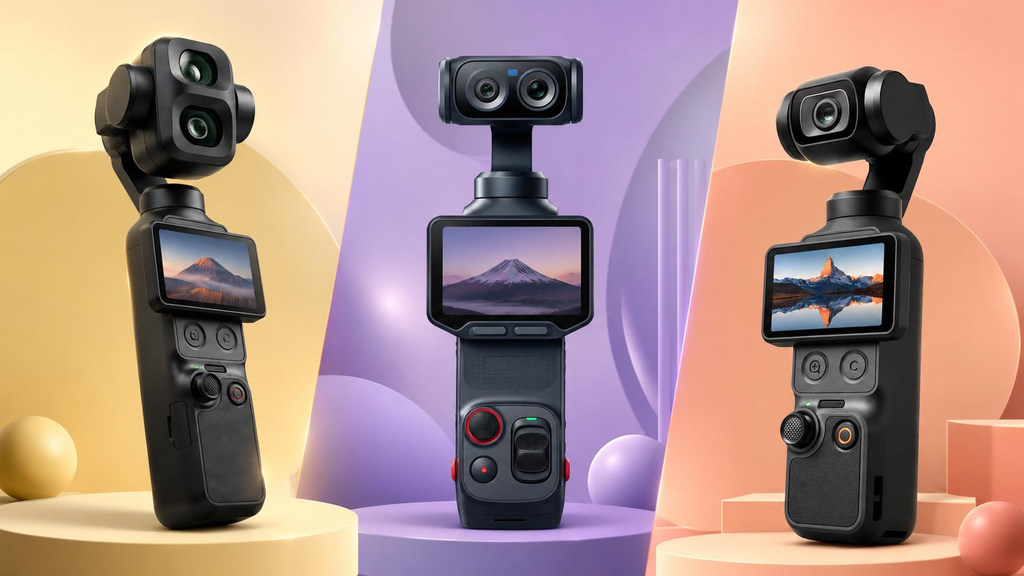
A pocket camera can make polished footage easier to capture, but the latest models do not all solve the same problem. The Pocket 3 remains a capable, compact camera. The Pocket 4 adds practical refinements, while the Pocket 4P and Insta360 Luna Ultra offer a second, telephoto perspective. The Luna Pro takes a different route, pairing a single wide camera with a detachable screen that works as a remote monitor. Choosing between them comes down to more than image quality: it depends on how you shoot, what you already own, and which features you will use.
The Pocket 3 still earns a place in a creator’s kit
The Pocket 3 combines a small body, a one-inch sensor, a built-in gimbal, wireless microphone support, and subject tracking. That makes it useful for travel footage, walk-and-talk videos, and B-roll without the bulk of a larger camera setup. The gimbal helps keep footage smooth, and tracking can follow a solo creator moving through a shot.
Its appeal is not that it replaces a mirrorless camera. It gives creators a different option: a camera that is easy to bring along when carrying more gear feels like too much. It can also serve as a main camera for studio videos, but its compact design is especially useful when filming on the go.
For current Pocket 3 owners, the newer models are not an automatic reason to upgrade. The camera still produces footage its owner is happy to use, and its lower price can make it an appealing first pocket camera.
The Pocket 4 improves the everyday experience
The Pocket 4 looks and feels familiar to Pocket 3 users. Its changes focus less on reinventing the camera and more on convenience, controls, and shooting options. Those refinements matter most when they fit a creator’s everyday workflow.
Built-in storage and extra controls
The Pocket 4 includes 107 GB of built-in storage, so recording does not depend on remembering a microSD card. The reviewer found that useful after forgetting a card on previous shoots. The built-in space can also be enough for someone who wants to record directly to the camera and transfer files later.
A dedicated zoom control and custom button reduce the need to make every adjustment through the screen. The camera also brings improved tracking, higher resolution, and better slow-motion frame rates.
Image quality is not the main reason to upgrade
The Pocket 4 offers a full D-Log profile, which gives color graders more flexibility than the Pocket 3’s D-Log M. But side-by-side footage did not show a dramatic difference in every situation. Both cameras looked good, and in automatic mode under decent lighting, it could be difficult to tell which image was better.
The Pocket 3 even had an edge in some conditions, producing more dynamic range and a cleaner, brighter image in low light. For Pocket 3 owners, the Pocket 4 makes the most sense when its storage, controls, or color profile solve a real need. For a first pocket camera, it offers a more convenient experience, if it is readily available where the buyer lives.
The Pocket 4P and Luna Ultra add a telephoto view
The Pocket 3 and Pocket 4 offer a single wide-angle perspective of about 20 mm. Digital zoom can add flexibility, but it sacrifices image quality. The Pocket 4P and Luna Ultra address that limitation with a second, telephoto camera, making it easier to move between filming yourself and capturing tighter shots.
Pocket 4P: more range, with more settings to manage
For the reviewer, the Pocket 4P’s secondary 3x telephoto camera is its biggest advantage. The wide camera handles vlogging and establishing shots; the telephoto camera can isolate a subject, capture a detail, or add variety to B-roll. It also makes portraits easier when the Pocket 4P is the only camera on hand.
The main camera’s D-Log 2 profile is described as capable of capturing up to 17 stops of dynamic range. The reviewer valued the detail available in highlights and shadows after grading, and found that the right settings and filters could bring the image closer to what they expected from a larger mirrorless setup. The camera also shares practical upgrades with the Pocket 4, including built-in storage, fast transfers, quick charging, extra buttons, and compatibility with DJI microphones and accessories.
There is a trade-off for creators who switch between lenses while recording. D-Log 2 is available only on the main camera. Switching to the telephoto camera requires changing to regular D-Log, which can interrupt a fast shooting workflow. Using regular D-Log on both cameras is one workaround, but getting the most from the 4P involves more technical choices than simply shooting in automatic mode.
Luna Ultra: a removable screen for solo filming
The Luna Ultra also pairs wide and telephoto cameras, but its most distinctive feature is a removable screen that works as a remote monitor. A solo creator can place the camera across the room, stand in position, and still check the frame and adjust settings. The remote also includes a microphone, allowing the person in front of the camera to speak into it for audio the reviewer described as decent.
Both the Luna Ultra and Pocket 4P can produce strong footage. In the comparisons described, the Luna often looked clean and vibrant straight out of the camera, while the Pocket 4P sometimes showed more detail and dynamic range or a more natural-looking image. The preferred result varied between shots. The removable monitor may matter more than small image differences for creators who often film themselves.
The Luna Pro suits creators who value monitoring
The Luna Pro keeps much of the Luna Ultra’s appeal but has one wide camera instead of two. Its removable screen makes it easier to frame and control a shot from a distance, while 4K vertical filming offers a higher-quality option for social content. That vertical feature has also rolled out to the Luna Ultra.
Image quality is described as close to the Ultra, though the reviewer noticed some color differences when comparing footage closely. The Pro was also more prone to lens flares in those comparisons. It lacks the Ultra’s telephoto camera, but offers digital zoom up to 4x. That provides some flexibility, though not the same range as a dedicated telephoto lens.
The Pro lasted about 45 minutes longer than the Ultra in the reviewer’s testing. Both cameras recharge quickly, which may make the battery difference less significant for some users. If most of your filming uses the wide camera and you only zoom occasionally, the Pro may offer a way to save money compared with the Ultra.
Four questions can narrow the choice
Start with what you already own. If the Pocket 3 still fits your needs, there may be little reason to replace it. If you want a first pocket camera and are working with a tight budget, the reviewer suggests looking for a Pocket 3 used or on sale. For Pocket 3 owners seeking a more substantial upgrade, the recommendation is to consider the Pro models rather than moving to the Pocket 4 or Luna Pro.
Next, consider whether you will use a telephoto camera. If tighter B-roll, slow-motion shots, portraits, and switching between wide and close views sound useful, the Pocket 4P and Luna Ultra are the relevant options. If those shots are rare, a single-lens model may be enough.
Your filming style also matters. Creators who plan shots behind the camera and expect to color grade may prefer the DJI models. Solo creators who frequently step in front of the camera may get more practical value from the Luna’s removable screen.
Finally, check local prices and availability. The source describes the Pocket 4 and 4P as not officially available in the US, though they can be obtained there at additional cost. Availability and prices vary by country. The Pocket 3 is described as widely available and affordable, while the Luna options are available in the US and the Luna Ultra is the most expensive model in the comparison.
Conclusion
No single camera is the right upgrade for every creator. The Pocket 3 remains useful, the Pocket 4 improves convenience, and the Luna Pro offers a distinct advantage for remote monitoring and vertical filming. The Pocket 4P stands out for creators who want both a wide view and a telephoto camera, and it is the reviewer’s personal pick because it fits their way of filming and works with accessories they already use. The best choice is the one whose specific strengths match the shots you actually make.
Frequently Asked Questions
Is the Pocket 3 still worth buying?
Yes. The reviewer still considers it capable, especially for buyers who find it used or on sale. It offers a one-inch sensor, built-in gimbal, tracking, and wireless microphone support.
Should Pocket 3 owners upgrade to the Pocket 4?
Only if the Pocket 4’s built-in storage, extra controls, tracking, slow-motion options, or full D-Log profile matter to their workflow. The image difference may be subtle in automatic mode and good lighting.
What is the main advantage of the Pocket 4P?
Its 3x telephoto camera adds a tighter perspective for details, portraits, and B-roll without needing another camera or lens. The main camera also supports D-Log 2.
What makes the Luna Ultra different?
Its detachable screen works as a remote monitor, helping solo creators frame and control shots from a distance. The remote also includes a microphone, and the camera has wide and telephoto views.
When does the Luna Pro make more sense than the Ultra?
The Pro may suit someone who mostly uses the wide camera, wants a removable monitor and 4K vertical filming, and is willing to give up the dedicated telephoto camera.
Which camera does the reviewer choose?
The reviewer chooses the Pocket 4P. Its combination of a simple wide camera, telephoto B-roll, color-grading flexibility, and compatibility with existing accessories best suits their filming style.